- Project
- Skull Castle
- Build time
- One weekend
- Team
- lakeshore5, InfinityBuilds, Jetblade3000
- Primary tool
- Axiom
- Inspiration
- Akkala Citadel Ruins (Breath of the Wild)
- Reception
- ~100k views on r/Minecraftbuilds
Why This Build Existed
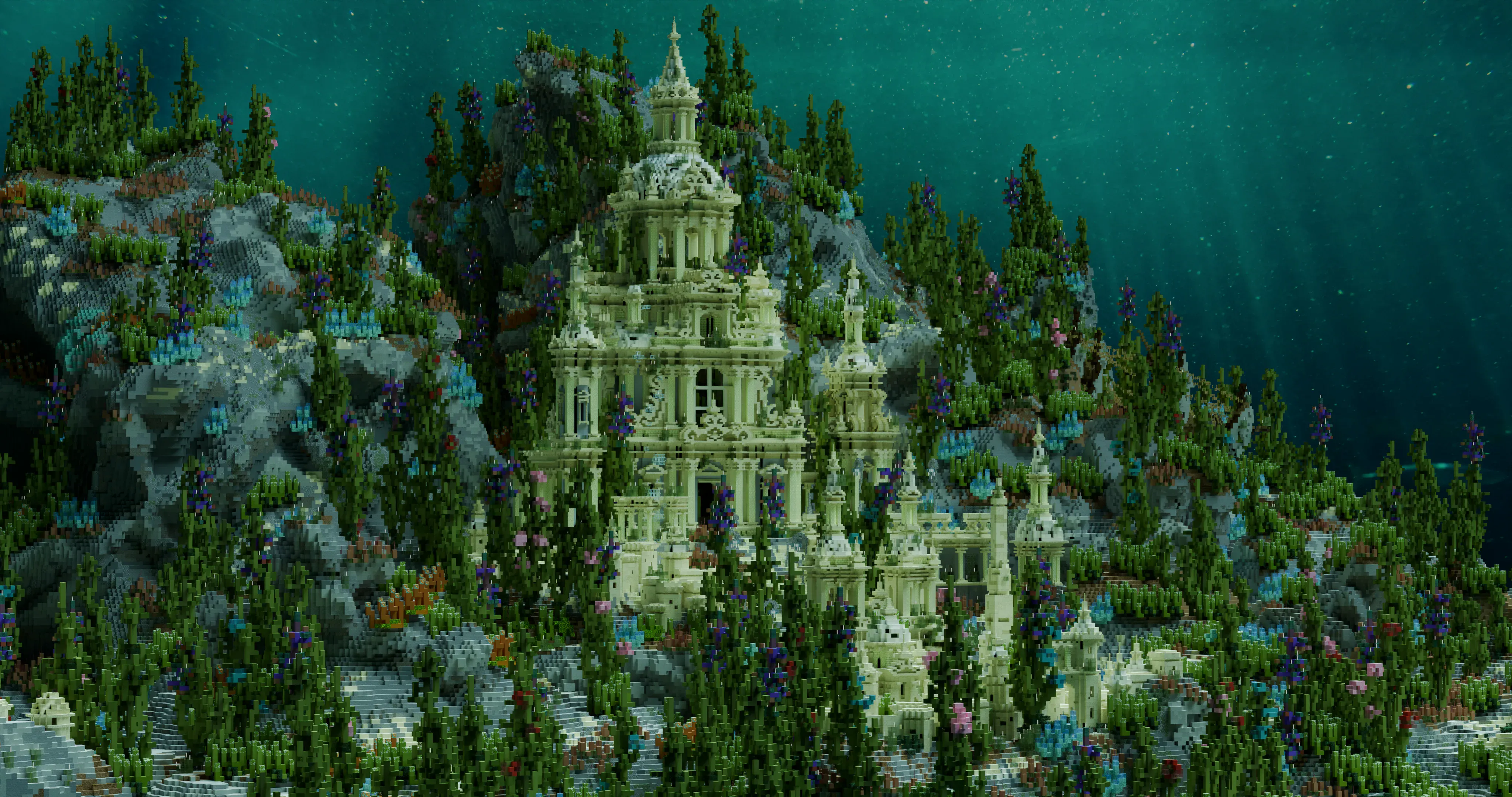
Skull Castle started as a fun side-project. It wasn't a commission, it wasn't a competition entry, and it wasn't tied to any of the studio work I usually do through Xenos Builds or C2lyn/Mythos Creations. It was a self-imposed exercise: pick a strong single image - a castle built around a skull - and see how far three of us could take it in a weekend, focused on integrating terrain, structure, and organics as a single coherent scene rather than three separate builds pushed together.
It also doubled as a hands-on Axiom case study. I'd been using Axiom for smoothing and finishing passes for a while, but I wanted to run a build almost entirely through it - from raw terrain to the last stone detail - to see how the tool held up as a primary workflow.
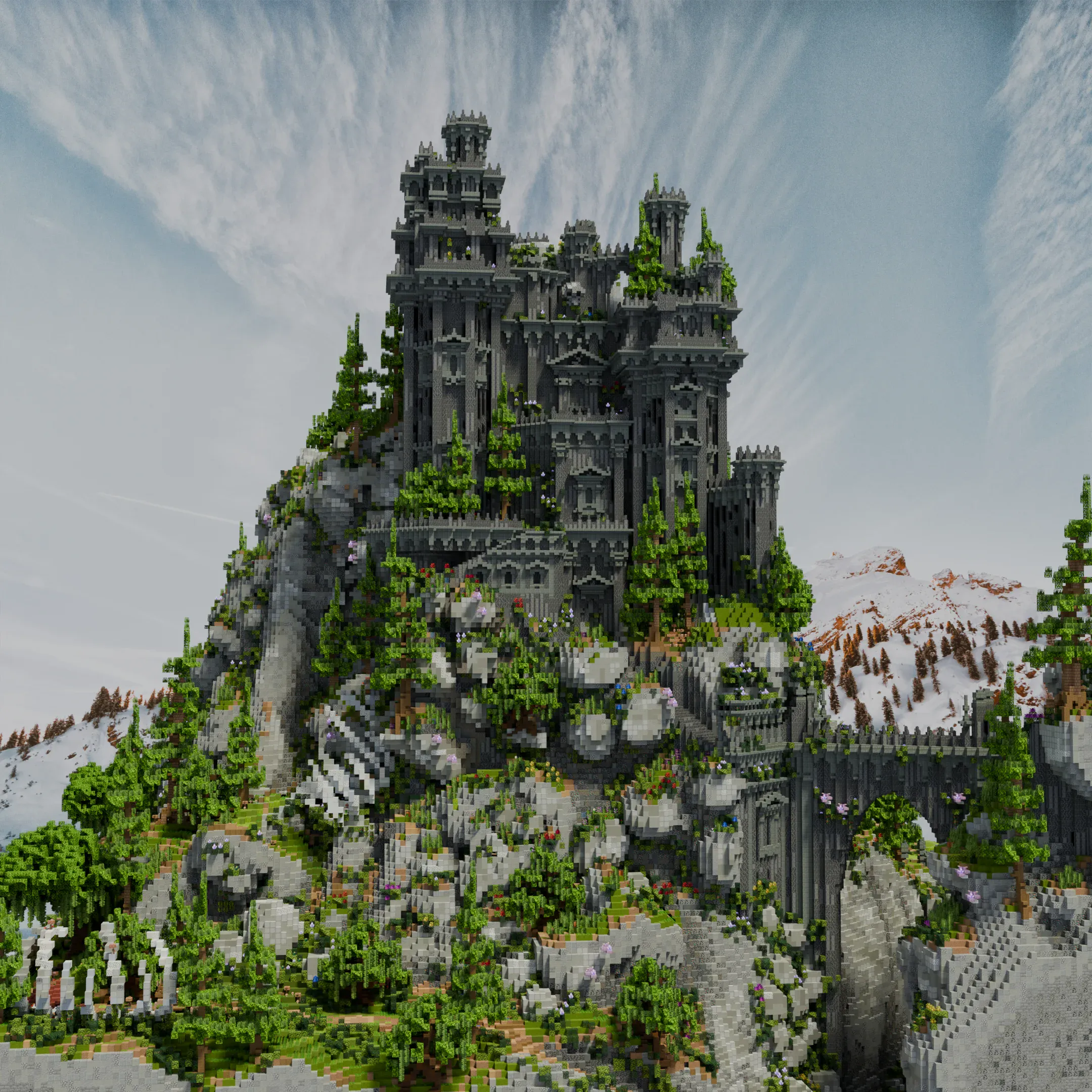
Terrain - A Study in Axiom
The terrain drove everything. Get the terrain wrong on a build like this and no amount of architecture can save the composition, because half of the image's silhouette is stone and rock, not walls.
I started with a br rock pass to get the general shaping - the coarse mass of the outcrop the castle would be built into, the ridgeline behind it, and the rough falloff toward the foreground. That gave me a blocky but proportionally-correct rock volume to sculpt against.
From there, the entire refinement pass was Axiom. I used the Axiom smoothing tool and height tool to shape the primary rock forms - pulling ridges up, softening transitions, and carving out the negative space where the castle would sit. The height tool is genuinely one of the best rock-sculpting tools available in Minecraft right now; you can push and pull rock volumes in a way that feels closer to digital sculpting than voxel editing, and you can iterate on shapes without committing to any single decision early.
Surface texture came from Axiom shatter with light smoothing. Shatter breaks up smooth rock faces into naturalistic block-scale detail, but on its own it can read as too noisy or too regular. Following it with a light smoothing pass lets the detail sit into the underlying form - the surface reads as rock, not as texture stamps. That combination became the primary texture recipe for the whole terrain.
The final terrain step was experimentation with autoshade against a rocky palette. I wanted the terrain to have depth and value variation without hand-painting every block, so I ran multiple autoshade passes with palette adjustments in between, testing how different stone mixes read against the skull and the castle stone. The result is a rock face that has real tonal range from base to ridge without any of the value being manually placed.
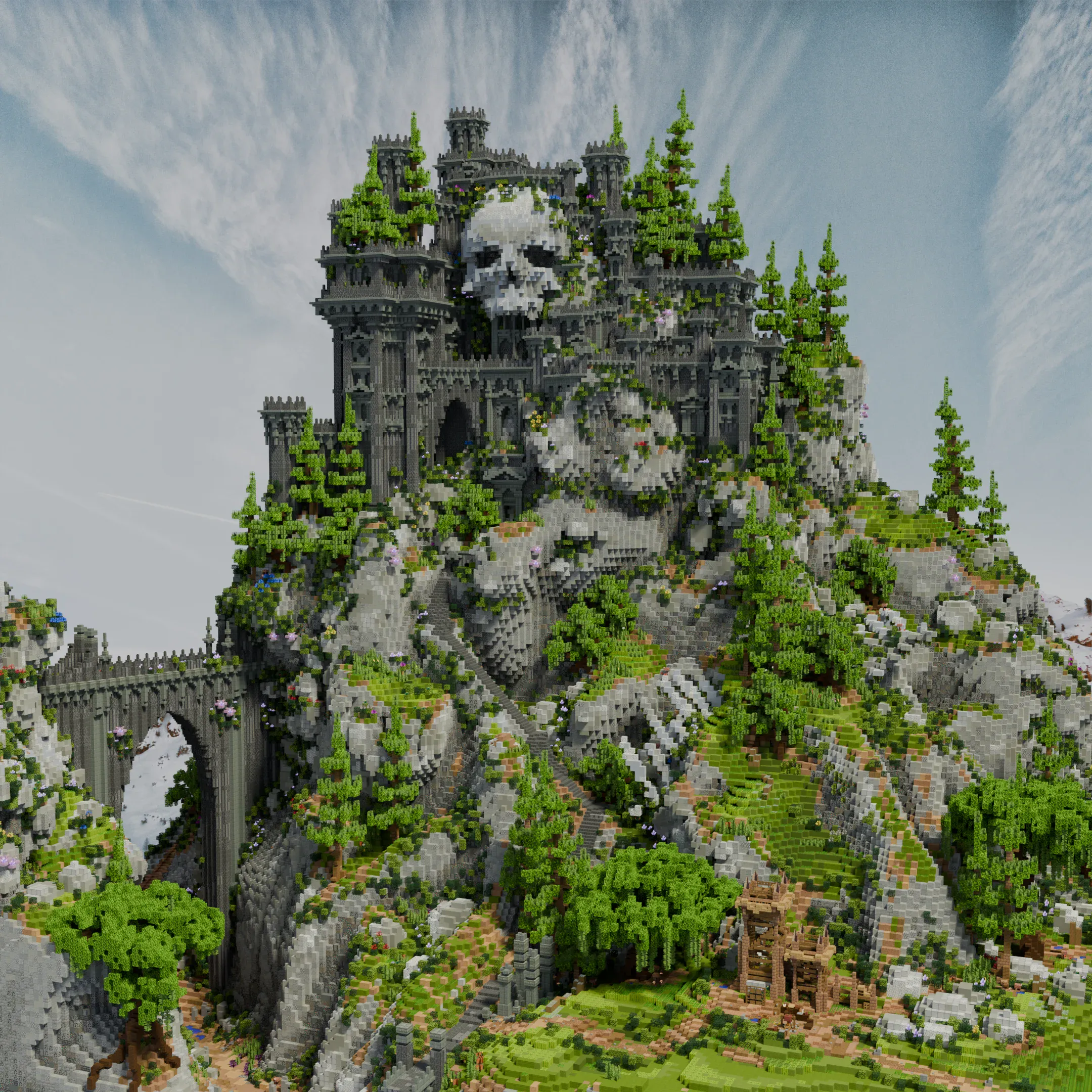
The Castle - Built Around the Skull, Inspired by Akkala Citadel Ruins
The castle itself takes strong inspiration from Akkala Citadel Ruins in Breath of the Wild - the way the citadel is carved into the rock, the vertical rise, the ruined military silhouette, and the sense that the fortification and the landscape are the same object. That was the reference I kept coming back to whenever I got stuck on massing decisions.
The skull is the composition's anchor. Every design decision for the castle - where the walls fall, where the towers rise, where the arches frame views - was made in reference to that central skull. If a wall broke the skull's silhouette in a bad way, it got moved. If a tower obscured too much of the eye socket, it got shorter. The castle is deliberately built around the sculpture, not next to it.
Jetblade3000 jumped in on helping copy both my window details and my plant work throughout the castle and terrain. Windows are one of those places where a lot of small consistent decisions add up to whether a build reads as "finished" or not, and having a second builder work in parallel was a significant time multiplier over a weekend.
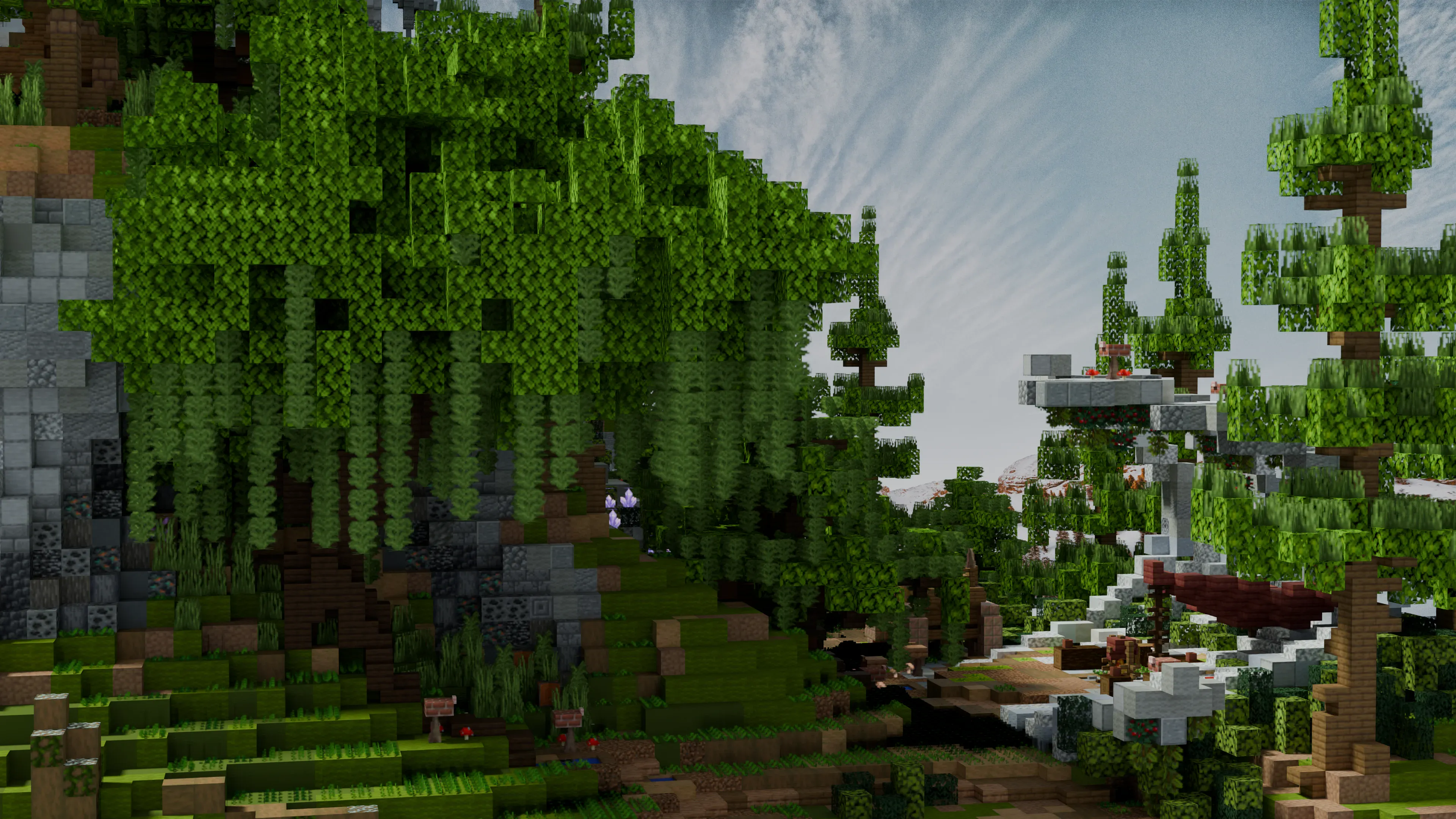
Organics and Detail - Working with InfinityBuilds
My friend InfinityBuilds (infinitybuildsmc.com) came in on the organic layer. While I did the Skull itself, he covered all of the jagged bone assets that can be seen breaking out of the terrain, some of the trees around the castle.
The bone work in particular benefited from that collaboration. Jagged bone that grows out of rock is genuinely hard to get right, especially when built as a disconnected asset, but Infinity providing those allowed me to easily figure out how to integrate and place them into the terrain without worrying about forming the bones themselves.
Working with builders like InfinityBuilds and Jetblade3000 under a shared vision is one of my favorite parts of this job. When everyone on the team understands what the image is supposed to be, you can hand off entire bits and pieces of a build and trust that the sensibility will match. Leading a build like that - setting the composition, holding the reference, and then giving the team room to work made for a much more enjoyable experience, and it's a huge part of why I've stayed close to the Minecraft collaborative build scene.
Timeline and Reception
Start to finish, Skull Castle took a weekend. That's fast for a build with this level of terrain sculpting, but it's also a good demonstration of what a small team using strong tooling can do in a compressed window when the composition is clear from the start.
After posting to r/Minecraftbuilds, the build hit nearly 100,000 views on Reddit - the post is still live here. That level of reception on a weekend side-project is a good reminder that the fundamentals - strong single image, integrated terrain and architecture, real collaboration - carry a build further than raw hour count.
Takeaways
1. Axiom is a legitimate primary workflow tool, not just a finisher. Running most of the terrain through Axiom's height, smoothing, shatter, and autoshade tools produced better rock than I would have gotten trying to do the same work in vanilla WorldEdit + VoxelSniper.
2. Terrain and structure have to be the same object. The reason Skull Castle reads as a place instead of a set of props is that the rock, the castle, and the skull were all shaped in reference to each other from the first pass.
3. Small teams with a shared vision beat solo builds. Two extra builders (Jetblade3000 and InfinityBuilds) helped make the project far more enjoyable and faster than it otherwise would have been.
If you're looking at Skull Castle as reference for your own work, the underlying project page is here, and my portfolio and services are at lakeshore5.com.
Related Projects
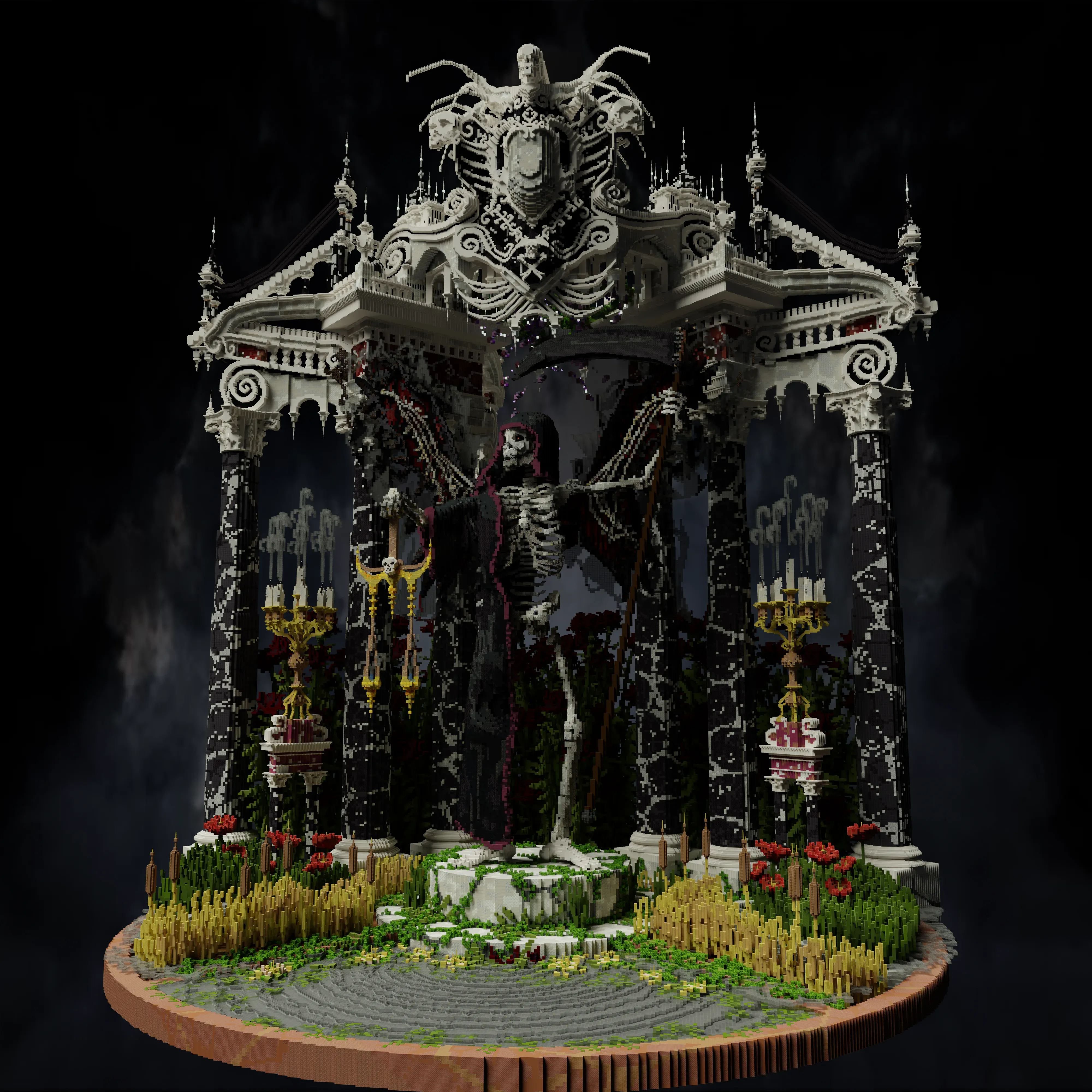
Want a build like this?
If you're planning a Minecraft build that needs integrated terrain, architecture, and organics, that's the work I do - solo, through Xenos Builds, or through C2lyn/Mythos Creations.
Discuss a Project